
Backflow Testing in California: The 2026 Guide for Property Owners
Who needs a backflow test in California, how often, who can do it, what happens if it fails, and the 30-day repair rule, based on the current State Water Board handbook.
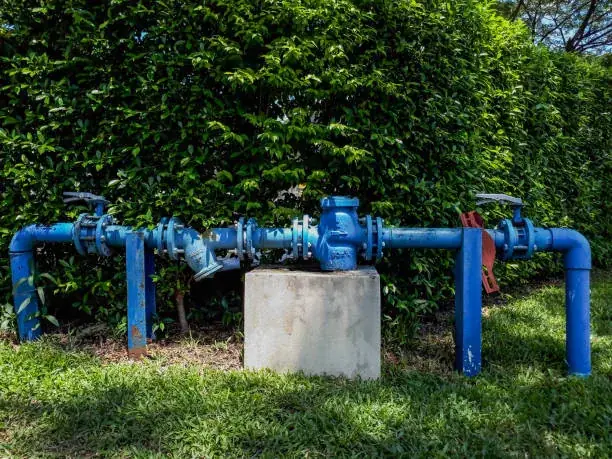
Short answer: In California, every backflow prevention assembly that protects a public water system must be field tested at least once a year by a certified backflow prevention assembly tester. It must also be tested after it is installed, repaired, relocated, or depressurized for winterizing. If it fails, it must be repaired or replaced within 30 days of the failure notice, then retested. Your water supplier runs the program, sends the test notice, and can discontinue service if an assembly is not tested or fixed. These rules come from the State Water Board’s Cross-Connection Control Policy Handbook (CCCPH), in effect since July 1, 2024.
Last reviewed October 26, 2026, against the April 2026 revision of the CCCPH. Sources are listed at the end.
If you just received a backflow test notice from your water company, this guide explains what it means, what you have to do, and how to avoid a shutoff.
What a backflow test is
A backflow prevention assembly is a valve assembly, usually near your water meter or on an irrigation or fire line, that stops water from flowing backward from your property into the public water supply. Backward flow can carry fertilizer, chemicals, or contaminated water into the drinking water your neighbors use.
A backflow test is a field check of that assembly with calibrated gauges. The tester confirms that the check valves and relief valve open and close at the pressures they are designed for. The result is written up in a test report that goes to your water supplier.
The rule today: the CCCPH, not Title 17
Many websites still say backflow testing is required by “Title 17, Section 7605.” That is out of date. The Title 17 cross-connection regulations stopped applying on July 1, 2024, when the State Water Board’s Cross-Connection Control Policy Handbook took effect. The State Water Board adopted a revised version of the CCCPH on April 21, 2026.
The CCCPH applies to public water systems. It requires each water system to run a cross-connection control program, and that program is what reaches you as a property owner: the water system identifies which properties need protection, requires the right assembly, and requires it to be tested.
Who needs a backflow test
You need annual testing if your property has a backflow prevention assembly that your water supplier requires to protect its system. Your water supplier decides this through a hazard assessment of your property.
The CCCPH lists premises the State Water Board treats as high hazard. These need the highest level of protection: an air gap (AG) or a reduced pressure principle assembly (RP), unless the handbook notes otherwise (CCCPH Appendix D). Examples from that list:
| Type of property | Examples from the CCCPH high hazard list |
|---|---|
| Health care | Medical facilities, kidney dialysis facilities, dental offices with water-connected equipment, veterinarian facilities |
| Commercial | Car washes, dry cleaners, industrial or commercial laundries, hotels and motels, gas stations, pet groomers |
| Industrial | Chemical plants, laboratories, biotech facilities, electronics manufacturing, metal plating, petroleum processing or storage |
| Multi-tenant | Business parks with a single meter serving multiple businesses, mobile home parks, RV parks, campgrounds with RV hookups |
| Water and land use | Agricultural premises, sites with an auxiliary water supply, recycled water use areas, properties with more than one connection to the water system |
| Other | Mortuaries, cemeteries, fire stations, airports, temporary fire hydrant connections for construction |
The list is not complete. Your water supplier can require an assembly for other hazards it finds during a hazard assessment, such as an irrigation system or a fire sprinkler system. Many homes with lawn irrigation have an assembly for this reason. If your water company sent you a test notice, it has your assembly on record and you need to test it.
For properties with an older double check valve assembly (DC) installed before July 1, 2024, the handbook allows some to stay in service under conditions. All new or replacement installations for those premises after July 1, 2024, must be an air gap, an RP, or both (CCCPH Appendix D).
How often you must test
| When | What is required | CCCPH section |
|---|---|---|
| Every year | Field test of each assembly, at least annually | 3.3.3(b) |
| After installation | Field test before the water system provides continuous service | 3.3.3(a), 3.3.3(d) |
| After a repair | Field test | 3.3.3(a) |
| After relocation | Field test after a permanent relocation | 3.3.3(a) |
| After winterizing | Field test after depressurization for winterizing | 3.3.3(a) |
| Air gaps | Visual inspection at least annually | 3.3.3(c) |
Once a year is the minimum. Your water supplier, the State Water Board, or the local health agency can require more frequent testing for high hazard premises or for assemblies at increased risk of failing (CCCPH 3.3.3(b)). Your notice will list your due date.
Who can perform the test
The test must be done by a certified backflow prevention assembly tester: a person holding valid certification from an organization the State Water Board recognizes (CCCPH 3.3.3(a) and 3.4.1). Many water suppliers also keep a list of testers approved to work in their area. Check your notice or your supplier’s website before you book.
Do you need a plumber? Not for the test itself. You need a certified tester. A plumber or other licensed contractor comes in only if the assembly fails and needs to be repaired or replaced. After the repair, the assembly has to be tested again by a certified tester.
What happens, step by step
- You receive a notice. Your water supplier mails or emails a notice listing the assembly, its location, and the due date.
- You hire a certified tester. Confirm the tester’s certification is current and, if your supplier requires it, that the tester is on its approved list.
- The tester tests the assembly. A standard test takes a short time per assembly. Water to the property may be off briefly while the test runs.
- The tester files the report. The report includes the test date, the result, and the tester’s certification number. Water suppliers must keep these records for the previous three calendar years (CCCPH 3.5.1(a)(4)). Ask for your own copy.
- Pass or fail. If the assembly passes, you are done until the next due date. If it fails, see the next section.
If your assembly fails
A failed assembly must be repaired or replaced within 30 days of the notification of the failure (CCCPH 3.3.3(e)). Your water supplier may allow an extension if its cross-connection control plan provides for one. After the repair, the assembly is tested again, and the passing report closes the issue.
If the tester sees signs of an actual backflow incident or an unprotected cross-connection, the tester must notify the water supplier within 24 hours. If the incident is confirmed, the water supplier must discontinue service to the property until it receives a passing test and the assembly is protecting the system (CCCPH 3.3.3(f)).
What happens if you ignore the notice
Every water system’s program must include rules giving it legal authority to act when a customer does not install, test, or maintain a required assembly. At least one of these options must be available to the water system: deny or discontinue water service, install, test, or maintain the assembly itself, or otherwise address the failure in a timely way (CCCPH 3.1.3). Some suppliers also add fees under their own rules. The details, and any grace period, are in your water supplier’s notice and rules.
The simplest way to avoid a shutoff: schedule the test as soon as the notice arrives, and keep a copy of every passing report.
Tips for property owners and managers
- Keep a list of every assembly you are responsible for, its location, size, and next due date. Multi-site owners and property managers often lose track of irrigation and fire line assemblies.
- Book early. Many water suppliers send notices to most of their customers on the same cycle, and testers get busy near due dates.
- Check the lease. If you rent out a property, decide in writing who schedules and pays for the annual test. Water suppliers typically send notices to the account holder or owner of record.
- Do not remove or bypass an assembly. A required assembly protects the public water system, and the water supplier can require it to be reinstalled and tested.
Backflow testing in Thousand Oaks and Ventura County
What changed in Ventura County: Effective July 1, 2025, Ventura County Environmental Health stopped sending backflow Notices to Test and accepting test reports. Each water supplier now runs the cross-connection control program for its own customers (Ventura County Environmental Health). For Ventura County Waterworks Districts 1 (Moorpark), 17 (Bell Canyon), 19 (Somis), and 38 (Lake Sherwood), certified testers submit results electronically through SwiftComply (Ventura County Public Works). If you are in Ventura County, your notice now comes from your water supplier, not the county.
Exodus Water Services is based in Thousand Oaks and provides backflow testing across Ventura County, Los Angeles County, and San Bernardino County, and for water systems statewide. Our certified testers test air gaps, RP assemblies, double check valve assemblies, pressure vacuum breakers, and spill-resistant vacuum breakers. When an assembly fails, we coordinate the repair with a licensed contractor and retest it, so you receive a passing report for your records and your water supplier.
See backflow testing services or call (805) 991-7333 to schedule a test. Water systems that need a full program can start with cross-connection control programs.
Frequently asked questions
How often is backflow testing required in California? At least once a year, plus after installation, repair, relocation, or depressurization for winterizing (CCCPH 3.3.3). Your water supplier can require more frequent testing for high hazard properties.
Is Title 17 still the backflow testing law in California? No. The Title 17 cross-connection regulations stopped applying on July 1, 2024. The current rules are in the State Water Board’s Cross-Connection Control Policy Handbook, revised April 21, 2026.
Who is responsible for backflow testing, the owner or the water company? The water company runs the program and must make sure required assemblies are tested. The property owner or account holder arranges and usually pays for the test of the assemblies on their property, through a certified tester.
How long do I have to fix a failed backflow assembly? 30 days from the notification of the failure, unless your water supplier’s cross-connection control plan allows an extension (CCCPH 3.3.3(e)).
Can a plumber test my backflow preventer? Only if that plumber also holds a current backflow prevention assembly tester certification from a State Water Board recognized organization. Certification, not a plumbing license, is what qualifies someone to perform the test.
Do homes need backflow testing? A home needs testing when the water supplier requires an assembly there, most often for lawn irrigation, a fire sprinkler system, an auxiliary water supply such as a well, or recycled water. If you received a test notice, your assembly is on record.
What happens if I do not test my backflow device? Your water supplier can act under its program rules, which can include discontinuing water service or testing the assembly itself (CCCPH 3.1.3). Check your notice for the deadline.
How long are backflow test records kept? Water suppliers must keep test results, repairs, and the tester’s certification number for the previous three calendar years (CCCPH 3.5.1(a)(4)). Keep your own copies too.
Sources
- State Water Board, Cross-Connection Control Policy Handbook page (effective July 1, 2024; revised April 21, 2026)
- State Water Board, Cross-Connection Control Policy Handbook, April 2026 revision (PDF): sections 3.1.3, 3.2.2, 3.3.3, 3.4.1, 3.5.1, and Appendix D