
Cross-connection control

Cross-Connection Control Programs for California Water Systems

Submittal-ready CCC Plans prepared with a certified CCC Specialist, submitted to your DDW District Office or LPA, and managed through approval.

Hazard assessments due for noncommunity systems: July 1, 2027

Technician testing a backflow prevention assembly with a pressure gauge kit
Built to California's frameworks
  • Title 22 §60301.175: CCCPH
  • Title 22: Drinking Water Standards
  • SB 555 · AWWA M36
  • DDW & DWR Submittals
Certifications & Registrations
  • SB-Micro #2045201 · SB-PW Certified: Certified California Small Business (SB-Micro #2045201), and Small Business for Public Works (SB-PW) certified.
  • DIR #2000018305: Registered with the California Department of Industrial Relations, #2000018305.
  • Cross-Connection Control Specialist: Certified Cross-Connection Control Specialists lead our cross-connection control programs.
  • Backflow Prevention Assembly Tester: Certified testers perform annual backflow prevention assembly testing and air-gap inspections.
  • SWRCB Certified Operators: State Water Resources Control Board Water Treatment and Distribution operator certifications.
  • SAM: UEI YSEPR7ZKJLJ7 · CAGE 21HX0: Registered in SAM.gov. UEI YSEPR7ZKJLJ7, CAGE 21HX0.
  • Water Loss Validation: CA-NV AWWA certified Water Audit Validators on staff. Validated water loss audits under SB 555, using AWWA M36 methodology.
  • Wastewater Treatment: Wastewater treatment operations and support for California systems.

The services

CCCPH hazard assessments and cross-connection control services

Built to the California CCCPH, from plan development through ongoing administration.

  • CCCP Development

    Complete, submittal-ready CCC Plan built to the State CCCPH for your system type, prepared with a certified CCC Specialist.

  • Legal Authority & Ordinance Development

    Ordinance, rules, or resolution giving your system the legal authority to enforce its program.

  • CCCP Submittal & DDW / LPA Coordination

    Submits your Plan to the DDW District Office or LPA and manages review comments through approval.

  • Hazard Assessments

    Identifies cross-connection hazards and the backflow protection required, in person or by approved alternative methods.

  • Backflow Prevention Assembly Survey & Inventory

    Locates and catalogs existing backflow assemblies and air gaps to build your tracking baseline.

  • Backflow Prevention Assembly Field Testing & Air-Gap Inspection

    Annual and post-repair testing by a certified tester, with air-gap inspections and repair coordination.

  • Backflow Incident Response & Notification Support

    Investigation, notification, and reporting support when a backflow incident occurs.

  • Ongoing CCCP Administration & Program Coordination

    Coordinator/specialist support, tracking, scheduling, and recordkeeping to keep your program current.

Free tool

CCCP Readiness Assessment

Answer ten yes or no questions and grade your cross-connection control program.

  • Free
  • 2 minutes
Question 1 of 10: Do you have a complete Cross-Connection Control Plan (CCCP) built to the California CCCPH?
Question 2 of 10: Has your plan been submitted to your DDW District Office or LPA, and approved?
Question 3 of 10: Has your system adopted legal authority (an ordinance, rules, or resolution) to enforce the program?
Question 4 of 10: Is your backflow prevention assembly survey and inventory complete and current?
Question 5 of 10: Have hazard assessments been completed for your service connections?
Question 6 of 10: Is annual backflow assembly field testing, including air-gap inspections, running on schedule?
Question 7 of 10: Are your testers' and specialists' certifications current?
Question 8 of 10: Do you have documented procedures for backflow incident response and notification?
Question 9 of 10: Is a program coordinator or specialist assigned to run the program day to day?
Question 10 of 10: Are program records (tests, surveys, assessments, submittals) kept in an organized records system?

"Not sure" counts as a gap: if it is not documented, it is not defensible yet.

Program detail

How the program works

Six program areas, from the first plan draft through day-to-day administration and incident response.

1. Plan development and program implementation

  • Develop a Cross-Connection Control Plan in accordance with the Cross-Connection Control Policy Handbook and California State Water Board regulations.
  • Submit the plan for review and approval by the State.
  • Address any revisions requested by regulatory agencies to facilitate approval.

2. Hazard assessments, documentation and reporting

  • Develop a structured plan for performing hazard assessments and prioritizing high-risk locations.
  • Conduct hazard assessments of service connections to identify and mitigate potential cross-connection risks.
  • Hazard assessments performed using CCCPH approved methodologies.

3. Assembly survey, inventory and field testing

  • Locate and catalog existing backflow prevention assemblies and air gaps to build the tracking baseline.
  • Annual and post-repair field testing by a certified tester, with air-gap inspections.
  • Repair coordination for assemblies that fail, through retest.

4. Specialist team and program coordination

  • Serve as the water system’s Coordinator and Certified Cross-Connection Control Specialist as required by the Cross-Connection Control Policy Handbook.
  • Provide continued assistance throughout the implementation and completion of hazard assessments.
  • Coordinate with the water system’s team and the State for regulatory compliance.
  • Prepare and submit required annual reports to the State.

5. Program administration and recordkeeping

  • Day-to-day program management: coordinator and specialist support for tracking, scheduling, and recordkeeping, so the program stays current.
  • Testing due-date reminders to property owners ahead of annual deadlines.
  • Test results recorded against the assembly inventory, assembly by assembly.

Programs we administer run on Exodus Water Compliance, our record system.

6. Incident response and notification support

  • Investigation support when a backflow incident occurs.
  • Notification and reporting support on the required regulatory timeline.
  • Program documentation kept ready for State Water Board review.

California requirements and case studies

What California law requires

Cross-connection control is a mandatory public health requirement under the State Water Board's Cross-Connection Control Policy Handbook (CCCPH), incorporated by reference in Title 22 CCR section 60301.175. It replaced the former Title 17 backflow regulations in July 2024. Every California water system must maintain a compliant Cross-Connection Control Program, including:

  • A written and enforceable Cross-Connection Control Program (CCCP)
  • Hazard-based surveys of all service connections
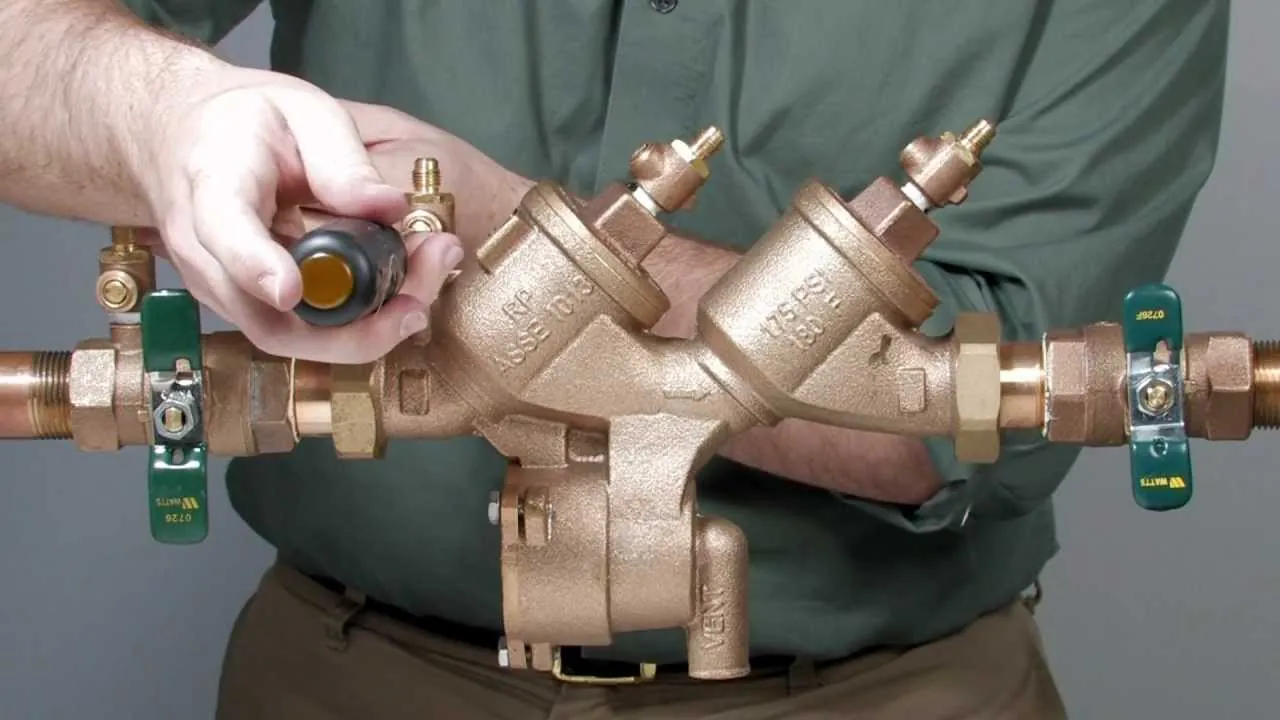
  • Installation of approved backflow prevention assemblies (RP, DCVA, PVB, Air Gap)
  • Annual testing by certified backflow prevention assembly testers
  • Complete recordkeeping and reporting available for State Water Board review

Hazard Assessments, Cross-Connection Control Program

City of Norwalk

One of the larger city water systems in Los Angeles County

Exodus runs Norwalk’s cross-connection control program: hazard assessments, testing coordination, and program administration.

Cross-Connection Control Program

City of Fillmore

City water system serving about 16,400 people in Ventura County

Exodus developed Fillmore’s Cross-Connection Control Plan and stood up the first year of its program, and continues as the City’s program partner.

Cross-Connection Control Plans and Ordinances, Two Systems

City of Port Hueneme

City water department serving about 22,200 people through roughly 5,800 service connections, supplied by the Port Hueneme Water Agency

Exodus developed Cross-Connection Control Plans and ordinances for both Port Hueneme water systems.

All case studies

FAQ

Questions about CCC programs

What is a cross-connection?

A cross-connection is a physical connection between a potable (drinking) water supply and any source of contamination, such as chemicals, sewage, or industrial waste.

What happens if a system is non-compliant?

The State Water Board may issue Significant Deficiencies, require a Corrective Action Plan (CAP), and conduct follow-up inspections. Continued non-compliance can result in enforcement actions.

Are fire line systems included?

Yes. Fire suppression systems must be included in your Cross-Connection Control Program and are subject to the same annual testing and recordkeeping requirements as all other connections.

Make your program survey-ready

Talk with a certified Cross-Connection Control Specialist about your system's CCCP, hazard assessments, and testing program.

Free download

Your 2027 compliance dates on one page

The free 2027 Deadline Calendar lists water loss audit, CCCP and operator renewal dates in one place.